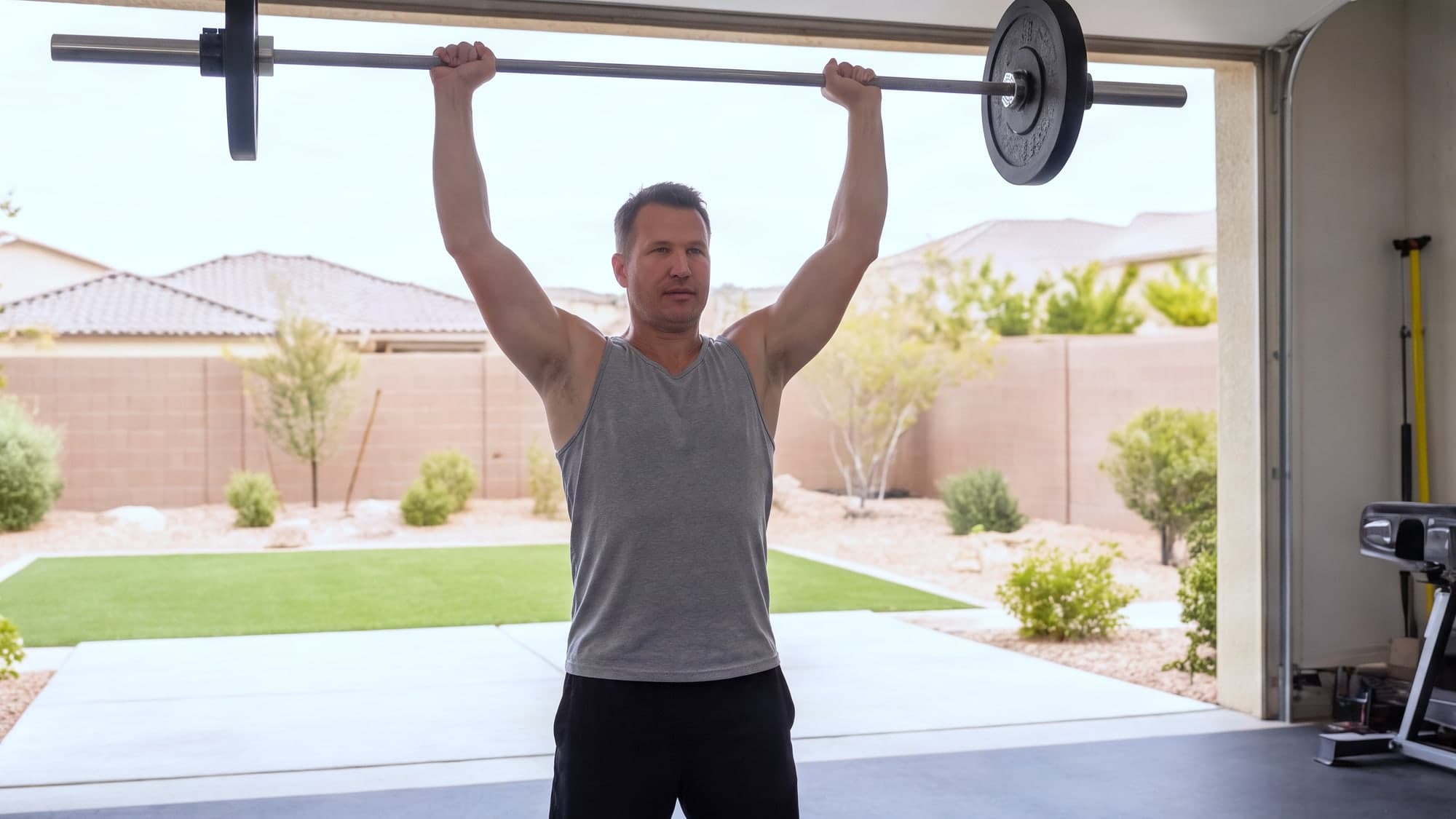
Few joints get used as much in the gym as the shoulder. Bench, overhead press, rows, pull-ups and even squats with a bar on your back all ask something of it. That is why "weightlifting shoulder pain" is a phrase lifters type into search boxes at all hours.
This article covers what lifters usually mean by shoulder soreness, the training basics that most people pay attention to, and how a GIOSTAR peptide program is built. It is general information. A provider diagnoses what is going on in a shoulder, and new or sharp pain should be checked by a doctor first.
What shoulder soreness means for weightlifters
The shoulder is a ball-and-socket joint with a lot of range, held in place by muscles and connective tissue rather than by a deep socket. That freedom of movement is what lets you press overhead, and it is also why lifters talk about it so much.
Soreness is a general word. A dull ache the day after a hard session is common among people who train. Sharp pain during a lift, a catch at a specific point in the movement, or weakness is a different conversation, and a provider is the right person to have it with.
Training load, warm-up and rest days for lifters at GIOSTAR and beyond
Lifters tend to talk about the same handful of basics:
- Training load. Adding weight or volume gradually, rather than all at once.
- Warm-up. A few easy sets with light weight or bands before the working sets.
- Balance. Pulling work to match pressing work, so the shoulder girdle trains evenly.
- Technique. A coach or training partner watching a lift can catch things you cannot feel.
- Rest days. A day between hard upper-body sessions, plus sleep and food.
- Variety. Changing grips and angles so one position does not take all the work.
This is the everyday vocabulary of the weight room. If your shoulder bothers you, a provider can examine it and tell you what it means for your training.
When lifters should see a provider about a sore shoulder
See a doctor first if the pain is sharp, if it started at a specific moment in a lift, if you have numbness or weakness in your arm, or if the shoulder feels unstable. Also ask if soreness keeps coming back no matter how you change your training. A provider can examine the joint and tell you what is going on.
Our work for active adults is building a supervised plan alongside your own provider's guidance.
How a peptide program at GIOSTAR is built around you
Peptide therapy at GIOSTAR is a program, and it starts with your bloodwork. The Peptide Optimization Membership is made up of custom peptide protocols chosen and dosed by a provider after your labs. The medication comes from a licensed pharmacy, and our team trains you to give your own injections. Our overview of what peptide therapy is explains each step.
Staying active is one of the goals a plan can be built around. Your nurse practitioner reviews your history, your medications and what you do each week, and decides whether a program is a fit for you. See the peptide therapy page for active adults for how the program is organized.
Bloodwork first: the lab panel behind a peptide program
Your plan starts with data. The Diagnostic Lab Panel is hormone, metabolic and biomarker bloodwork: 100+ biomarkers from one morning draw at a Quest location near you. Results come back in about a week, and a nurse practitioner reviews every marker with you.
The program is built from those numbers rather than from a template. A nurse practitioner rechecks labs as the plan goes, and each check-in covers how you are doing and what to change. For the details of what a panel includes, read what a full-body blood panel measures.
Athletes who face drug testing should check with their governing body before any treatment, and tell the provider at the consultation.
Lifting, peptide therapy and staying active in Las Vegas
Whether you train in a garage in Henderson or a gym in Summerlin, a training life is a long-term project, and the habits behind it are mostly ordinary ones. A peptide program is a provider-built plan that sits beside them. For the low-back side of lifting, see lower back soreness from lifting.
Questions lifters ask before starting a GIOSTAR peptide program
Lifters who consider a peptide program tend to ask the same things. Who chooses the protocol? A provider does, after bloodwork. Where does the medication come from? A licensed pharmacy. How do I learn to inject? Our team trains you before you leave the center. Does the plan stay the same? No, it is reviewed with each lab check-in and your nurse practitioner adjusts it with you.
The other question is what a program includes. It includes supervision, bloodwork and a provider who answers your calls. If you want a plan for a training life, that is the conversation to have at your free consultation.
Peptide therapy at GIOSTAR in Henderson
GIOSTAR stands for Global Institute of Stem Cell Therapy and Research. Founded by Dr. Anand Srivastava, GIOSTAR International is part of a network across three countries, built on research at Salk, UC San Diego, UC Irvine and UCLA. Our Henderson wellness center is at 2482 W. Horizon Ridge Pkwy, Ste 100, Henderson, NV 89052, with free parking at the door.
Your first step is a free consultation with our patient team, online, by phone at 702.703.5393 or in person. Read more about peptide therapy at GIOSTAR.