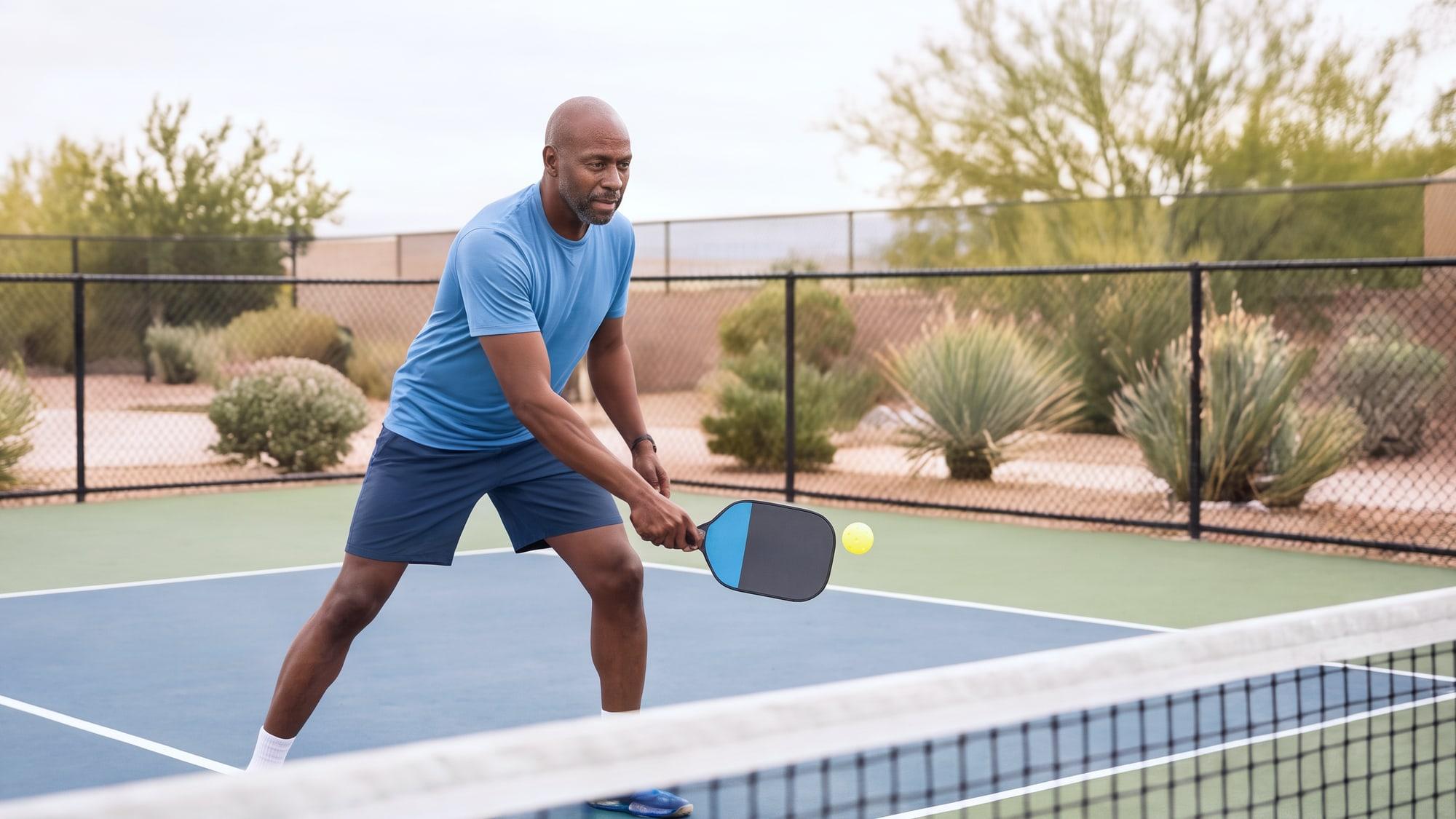
Pickleball has grown fast across the valley, with courts in Henderson parks, Summerlin rec centers and backyards. A few games turn into a morning, and a morning turns into most of a week. The wrist, which handles a paddle all session, tends to be where players feel it first.
This article covers what players mean by wrist soreness, what to look at with a coach, when a doctor comes first and where a GIOSTAR peptide program fits an active plan.
What pickleball wrist soreness refers to
When players search "pickleball wrist pain," they usually mean soreness at the wrist or the base of the thumb after playing. The wrist is made of several small bones, with muscles and tendons from the forearm running through it. Gripping a paddle, changing direction and reacting at the kitchen line all use it.
The phrase is a description, not a diagnosis. It says where and when. A doctor who can examine your wrist can say why.
Paddle grip and play volume behind pickleball wrist soreness
Players and instructors tend to mention a few things.
- Grip. Grip size and how tightly you squeeze affect what the hand does.
- Paddle weight. A heavier paddle or a different balance feels different at the end of a session.
- Play volume. Several sessions in a row, or tournament days, add up.
- Court surface. Hard courts and long sessions in the summer sun are part of valley play.
- Warm-up. Players who loosen up first often mention it.
An instructor or physical therapist can look at yours.
When to see a doctor before a peptide program at GIOSTAR
See a doctor first if soreness is new, sharp, follows a fall onto an outstretched hand, comes with numbness or does not ease with ordinary rest. A physician or sports medicine doctor can examine the wrist and tell you what is happening. We build around the care you are already getting.
How a GIOSTAR peptide program is built around a pickleball player's goals
The Peptide Optimization Membership is a program, not a product. It begins with bloodwork. A provider reviews your panel, then chooses and doses a custom peptide protocol for a goal you set together. The medication comes from a licensed pharmacy, and our team trains you to self-inject.
For a pickleball player, a goal might be staying active through a long season. Your provider builds the plan around that goal and adjusts it as your labs and routine change. See what peptide therapy is and peptide therapy provider questions to learn the category before you decide.
For the program itself, see peptide therapy at GIOSTAR and peptide therapy for active adults.
What to ask a provider about pickleball and peptide therapy at GIOSTAR
Ask who prescribes, who reads your labs, where the medication comes from and who you call between visits. Players in tested events should check with their governing body before any treatment and tell the provider at the consultation.
What a first visit looks like for a pickleball player at GIOSTAR
The first visit is free. You meet a nurse practitioner, who reviews your health history, your goals and your week. Labs may be recommended, and a protocol is chosen only after your provider reviews your bloodwork. Bring your medication and supplement list and any instructions from your doctor.
Summer courts, long sessions and fluids for pickleball players at GIOSTAR
Valley players know the pattern. Courts fill early, games run long and the shade is gone by ten. Desert sun and a few hours of play add up to a lot of sweat. Water, electrolytes and a break in the shade are part of the plan for most players, and so is a day off when the schedule allows.
Some players also like the idea of a plan with bloodwork behind it. That is a conversation for a nurse practitioner, who reviews your history, your goals and your week and tells you whether a peptide program or something else fits. If a doctor should see you first, you hear that early.
Equipment and instruction for pickleball players beyond GIOSTAR
A paddle shop or an instructor can help with grip size, paddle weight and the way you hold the handle. A few lessons often change how a player moves and how hard the hand squeezes. Pickleball clubs in Henderson and Summerlin run lessons for new and experienced players, and many offer paddle demos.
These are the first places to look for most questions about your game. Our role is the plan around your health and your bloodwork, built beside the people who know your game.
Pickleball wrist soreness and GIOSTAR in Henderson
GIOSTAR stands for Global Institute of Stem Cell Therapy and Research. Founded by Dr. Anand Srivastava, GIOSTAR International is part of a network across three countries, built on research at Salk, UC San Diego, UC Irvine and UCLA. Our Henderson wellness center is at 2482 W. Horizon Ridge Pkwy, Ste 100, Henderson, NV 89052, with free parking at the door. Dr. Ryan Peterson, our Medical Director, oversees care.
Your first step is a free consultation with our patient team, online, by phone at 702.703.5393 or in person. Read more about peptide therapy at GIOSTAR, or see tennis wrist soreness for the racket-sport version of this question.