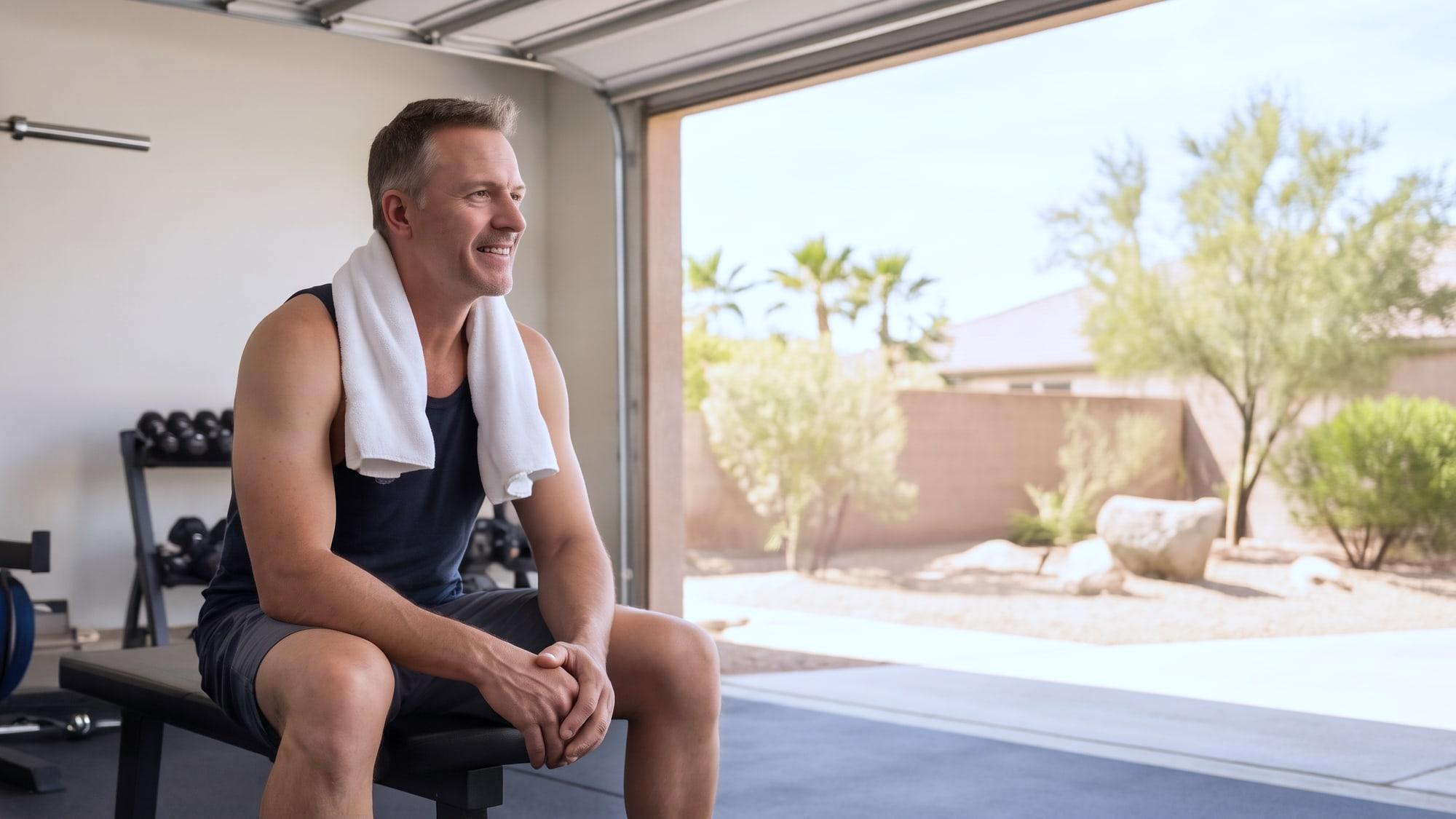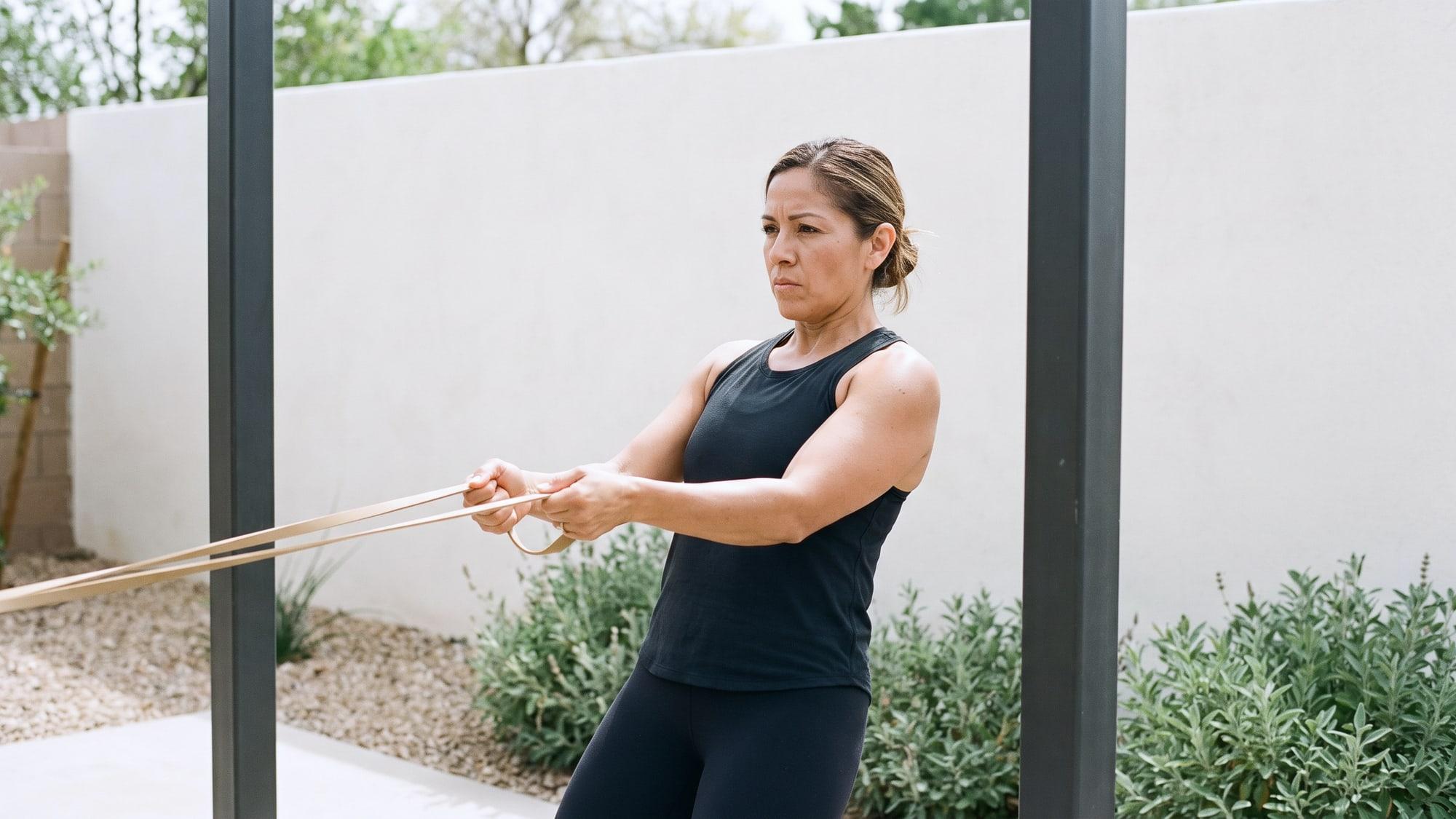
You finish a long week at the keyboard, a Saturday round of golf and a Sunday on the road to Lee Canyon, and the spot between your shoulder blades is the thing you notice. People type "back pain between shoulder blades" into search all the time, and the question behind it is nearly always the same: what is this, and what do I do about it?
This article walks through what the phrase refers to, the everyday situations active adults mention, when to see a doctor first and how a GIOSTAR peptide program fits an active plan.
What soreness between the shoulder blades refers to
The area between the shoulder blades is the upper back, where muscles tie the shoulder blades to the spine. Those muscles hold your posture, assist when you pull, row or reach and keep the shoulder blades in place when your arms move.
When people describe soreness there, they are usually describing a dull ache, tightness or a knot that sits in one spot. A provider who examines you is the only person who can say what is behind your own. This article stays with general information.
Posture and training load behind upper back soreness
Active adults tend to mention the same few situations.
- Desk posture. Hours in front of a screen with shoulders rounded asks the upper back to hold a position for a long time.
- Driving and flying. A long drive to the Spring Mountains or a trip home can leave you sitting in one position.
- Pulling and rowing. Rows, pull-ups, rowing machines and golf swings all load the upper back.
- Sleep position and pillows. Some people notice the ache first thing in the morning.
- Training jumps. A new program, or a return after time off, changes what the upper back is asked to do.
None of this is a diagnosis. Coaches, physical therapists and your own doctor can look at your posture and your training and advise on changes.
When to see a doctor before a peptide program at GIOSTAR
See a doctor first if the soreness is new, sharp, follows a fall, or does not ease with ordinary rest. Pain that comes with chest tightness, shortness of breath or pain spreading to your arm or jaw needs medical attention right away, so call 911 for chest pain or severe trouble breathing.
A physician can examine you, order imaging when it is needed and diagnose what is happening. GIOSTAR works on a different part of the picture, the plan for staying active, and builds it around any care you are already getting.
How a GIOSTAR peptide program supports an active plan
The Peptide Optimization Membership starts with bloodwork. A provider reviews your panel, then chooses and doses a custom peptide protocol for a goal you set together. The medication comes from a licensed pharmacy, and our team trains you to self-inject.
For someone who trains hard and sits at a desk, a goal might be staying active through a demanding season or building a plan around a training schedule. Your provider shapes that plan with you and adjusts it as your labs and your life change.
To see how the category works, read what peptide therapy is and peptide therapy provider questions. The program page covers peptide therapy at GIOSTAR, and there is more on peptide therapy for active adults.
What a visit looks like for adults with upper back soreness at GIOSTAR
The first visit is free. You meet a nurse practitioner, who reviews your health history, your work and training week and your goals. Labs may be recommended. If a peptide program suits your plan, your protocol follows the bloodwork, and about every three months your labs are checked again.
Bring a list of your medications and supplements. If your own doctor or physical therapist has given you instructions, bring those too.
Who a GIOSTAR peptide program is built for
Adults who train regularly, travel often or work long hours at a desk and want a plan from a licensed provider can ask a nurse practitioner whether a peptide program fits their goals. Athletes who are drug tested should check with their governing body before any treatment.
A weekday and weekend rhythm for adults with upper back soreness at GIOSTAR
Many adults who ask this question live a split life: a desk five days a week and a trail, a court or a gym on the weekend. The upper back absorbs both. A few minutes of standing, walking or changing position through the workday gives it something different to do, and so does a screen set at eye level and a chair that supports you.
On the weekend, a warm-up before a hike or a round of golf, and a gradual build in anything new, are common habits. A physical therapist can show you movements that fit your body, and your own doctor can answer questions about your health. A peptide program at GIOSTAR sits beside that guidance as one part of a plan, and your nurse practitioner talks through how it fits your week before you decide anything.
Soreness between the shoulder blades and GIOSTAR in Henderson
GIOSTAR stands for Global Institute of Stem Cell Therapy and Research. Founded by Dr. Anand Srivastava, GIOSTAR International is part of a network across three countries, built on research at Salk, UC San Diego, UC Irvine and UCLA. Our Henderson wellness center is at 2482 W. Horizon Ridge Pkwy, Ste 100, Henderson, NV 89052, with free parking at the door. Dr. Ryan Peterson, our Medical Director, oversees care.
Your first step is a free consultation with our patient team, online, by phone at 702.703.5393 or in person. Read more about peptide therapy at GIOSTAR, or see shoulder and neck soreness in active adults for the neighboring area.